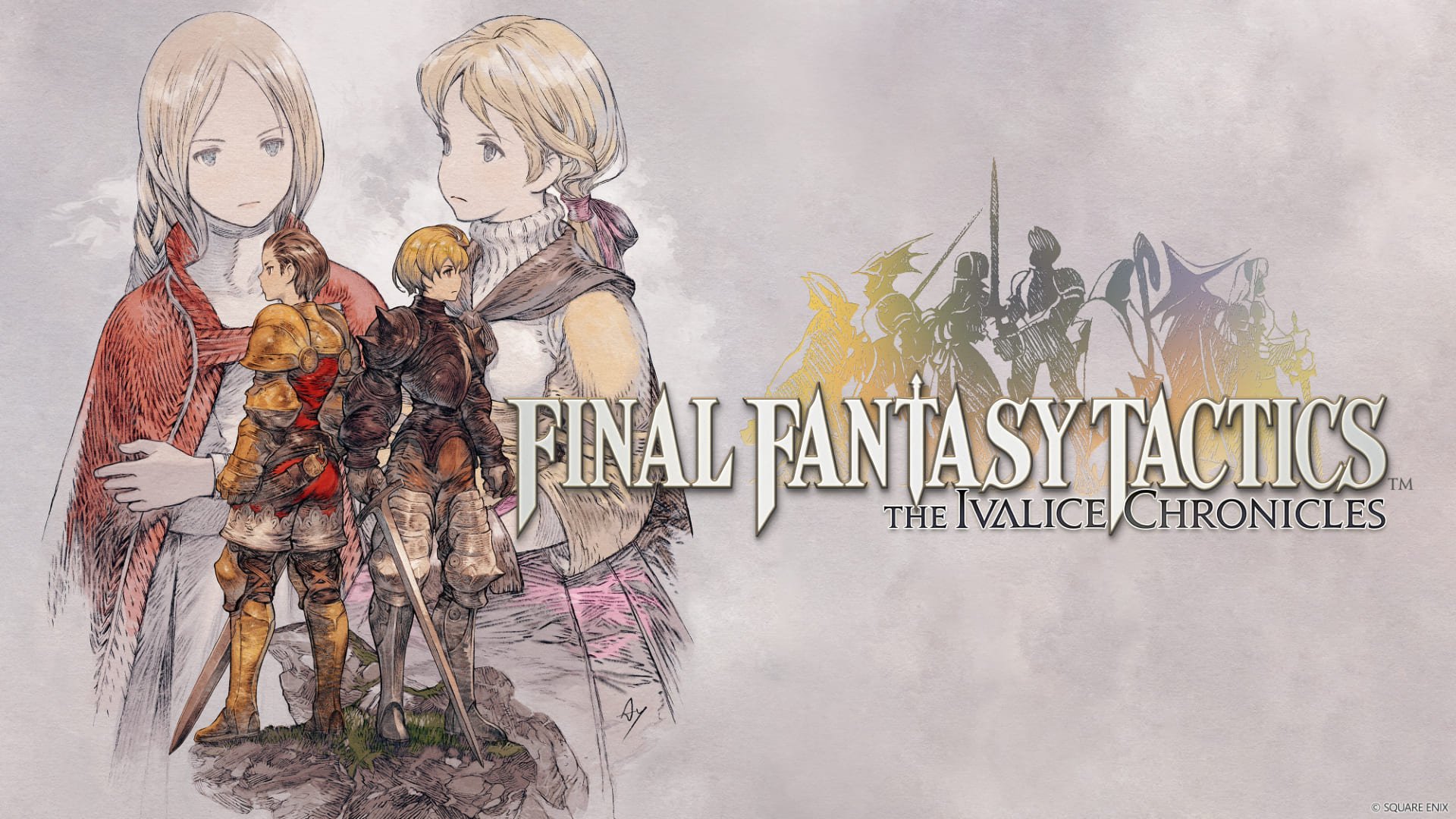
What makes a Final Fantasy game? Is it the magical spells, crystals, and larger-than-life summons? Is it the character-centric stories set in a world where fantasy and sci-fi flirt with each other? Perhaps it’s simply the recurrence of Chocobos and some guy named Cid. In any case, Final Fantasy Tactics has all the makings of a Final Fantasy game despite being a game quite different from the rest in its series at the time.
First released in 1997, Final Fantasy Tactics achieved critical acclaim. The game was lauded for its politically intriguing narrative and in-depth tactical combat. The visuals were also novel for its time, with 2D sprites with 3D backgrounds that could be rotated by the camera, a novelty back then.
While I’ve dipped my toes in the pool of tactical role-playing games with the Fire Emblem games from the 3DS onwards, I haven’t had the chance to play a classic from the genre. What better way than with a franchise that’s beloved to me? And so, I went into Final Fantasy Tactics - The Ivalice Chronicles completely blind and finished the game feeling accomplished, but also contemplative.

Heroes, Heretics, and Hypocrites
The story takes place in the fictional world of Ivalice. Thanks to the Fifty Years’ War against Ordallia, Ivalice has been left in shambles. The land is stricken with war debts, reparation payments, and unemployment, leading to a rise in distrust towards the aristocracy by the common folk.
The protagonist, Ramza Beoulve, is of noble blood. House Beoulve is a distinguished family of knights sworn to the Crown of Ivalice. Unlike Ramza, his childhood friend, Delita Heiral was born to a farming family. After losing their parents to the plague, Delita and his sister, Tietra, are taken under the wing of House Beoulve.
Ramza and Delita become knight apprentices for the Order of the North Sky, but both of them end up facing the harsh realities of the world they’re in. When Tietra ends up being a casualty in an uprising, the two childhood friends abandon their noble ties and go their separate ways.

Years later, Ivalice is up in arms over its successor to the throne. Ramza has severed his ties with House Beoulve and is now part of a mercenary group protecting Princess Ovelia, one of the proposed heirs to succeed the Ivalician throne. Meanwhile, Delita has now aligned himself with the Order of the Southern Sky, a knightly company that seeks to kidnap Princess Ovelia.
As you can tell, Tactics is very heavy on the world-building. There are multiple kingdoms, fiefdoms, rulers, knightly orders, and whatnot. The first chapter, especially, can feel overwhelming with the amount of lore that gets dumped on you, but thankfully, I’m not averse to reading. The encyclopedia neatly summarizes information on each person and locale, as well as other important terminology.
One of my favourite features from Final Fantasy XVI makes a return in this remake, 'State of the Realm.' It’s a neat little timeline of events that occur across the world map, with each character’s status and position mentioned. These two features really came in clutch for me, especially since there’s an abundance of names to remember.

Nonetheless, I found myself thoroughly engrossed in the story. It’s a lot more politically-charged than the usual Final Fantasy, but its themes are, to no surprise, still remarkably relevant. There’s no single big bad villain to take down like Sephiroth, but rather multiple corrupt individuals who occur throughout the narrative. Not everything is black and white, either, as every character has their own shortcomings and fallacies.
There’s no doubt that the voice acting adds a whole new layer of immersiveness to the story. I never thought I’d hear someone use the words ‘milksop churl’ as an insult, but here we are. The Ivalice Chronicles also uses the exact same soundtrack as the original, and they do a great job of conveying the grandeur of the game’s narrative.
A Class Act
While the story is the meat of Tactics, the potatoes are, of course, the combat. Much like any TRPG, the combat takes place on isometric fields. Each character’s movement and abilities are determined by their job class. The remaster includes a whopping 20 job classes, so the possibilities are endless.

The game features three difficulty modes: squire, knight, and tactician. I chose knight, wanting the authentic experience, and I sure got it. Tactics doesn’t really hold your hand when it comes to combat. It will teach you the very basics, such as how to move across the field and navigate the job system, but for the most part you’re on your own.
The first few hours of Tactics can feel like a slog, especially when you’re just figuring things out. Moreover, the game’s difficulty remains the same as the 1997 version, so it’s not quite balanced throughout. I couldn’t quite understand where I was going wrong in my battles. Was I underleveled? Did I need more variety in my party in terms of job classes? Was I just stupid? Once again, I turned to the game’s extensive reading material.
There’s plenty of stuff to read up on in the ‘Stratagems for Battle’ section, and while some things, like Zodiac compatibility, aren’t too consequential, other things, like the bravery and faith stats, are extremely important.

For example, a character’s bravery stat can rise and fall. If it goes too low, they can leave your party permanently. I caught it early in my playthrough, so I didn't have one of my characters just disappear out of cowardice, but I can only imagine how devastating it would be for someone’s character to just disappear because they didn’t notice.
There are a few quality-of-features that have been added to the combat, though. You can view the battlefield from above with the tactical view feature, speed up battles with the fast-forward option, and auto-save during battles.
Apart from that, The Ivalice Chronicles also features a more modern UI and “improved graphics,” but as a pixel purist, the upscaled pixels really don’t do the original art justice. While the battlegrounds have been reworked for modern displays and there are a few depth-of-field effects, it all feels a bit underwhelming. The remake should have gotten the HD-2D treatment, or, at the very least, a way to turn off the pixel smoothing.

The Ivalice Chronicles does include the classic 1997 edition of the game, but you have no choice but to start the game from scratch instead of using the same save file between both versions. Moreover, both versions of the game do not include the additional content from the 2007 Final Fantasy Tactics: War of the Lions version of the game, an enhanced version of Final Fantasy Tactics for the PSP that included a multiplayer mode, new characters, new in-game cutscenes, and more.
It seems like a wasted opportunity to not include content from a version of the game that fans consider to be the definitive edition, especially when The Ivalice Chronicles uses the much improved War of the Lions English translation. Unless there’s a DLC planned down the line, the extra content will, unfortunately, be locked away in the PSP version of the game.
Final Fantasy Tactics - The Ivalice Chronicles Review | Final Thoughts
Ultimately, the original Final Fantasy Tactics is a masterclass in the TRPG genre. The Ivalice Chronicles is a competent remake for modern systems, but it still doesn’t surpass the definitive War of the Lions version. Still, for newcomers, it offers a fantastic gateway into a classic and reaffirms the timeless strength of Final Fantasy Tactics.
Final Fantasy Tactics - The Ivalice Chronicles was reviewed on PC with a copy provided by the publisher over the course of 40 hours of gameplay - all screenshots were taken during the process of review.
Review Summary
Pros
- Evergreen narrative that’s character-driven, full of political intrigue, and lore-heavy
- In-depth job system that offers loads of creative freedom
- Superb voice acting that elevates the immersion
Cons
- Artificial pixel upscaling can be visually off-putting
- Lack of additonal Final Fantasy Tactics: War of the Lions content

Tanushri is a staff writer on TechRaptor. Having been… More about Tanushri