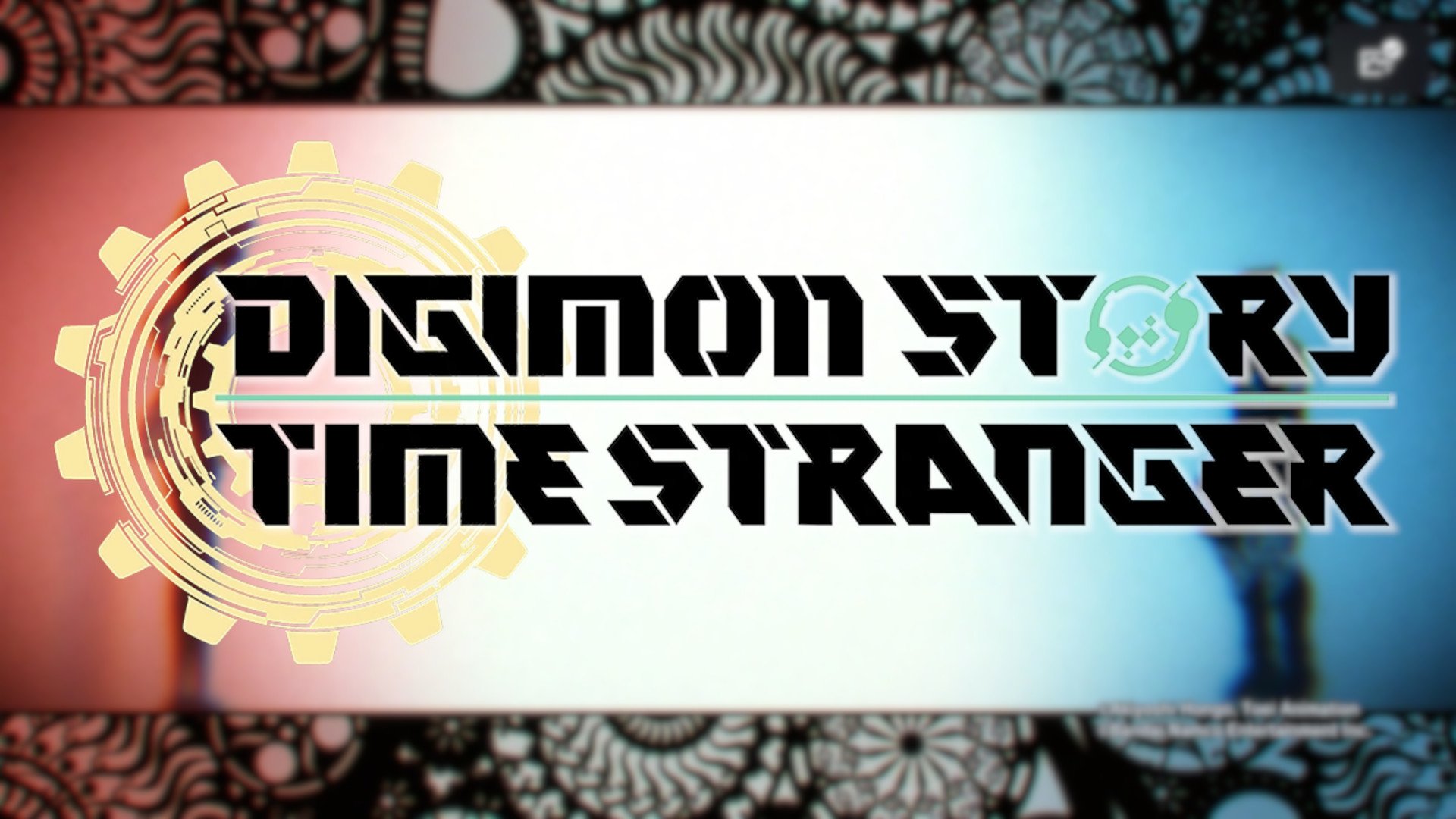
It has now been almost eight years since the last release of a Digimon Story title. This line of RPGs, not to be confused with the Monster Sim Digimon World titles, puts players in the shoes of a human who befriends Digimon, trains them up to be big and powerful, and ultimately saves the world. In Digimon Story: Time Stranger, the world you explore is bigger, the roster of available Digimon is larger, and the scope of the story has increased just as much.
In Digimon Story: Time Stranger, you take on the role of a protagonist investigating a phenomenon known as Digimon, protecting the secret of their existence from the world. On your latest mission, you encounter a strange phenomenon and end up being transported back in time eight years.
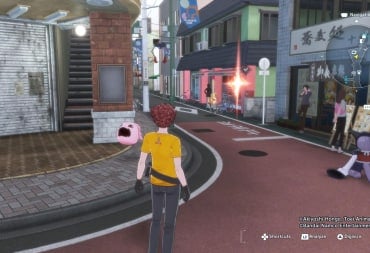
Starting with a simple investigation in the presence of Digimon in the past, the scope of the story explodes fast, allowing you to explore Shinjuku and Akihabara, expanding to not only include a vast Digital World filled with various themed areas, but also further exploration through time.

The Time Stranger Was The Friend You Became Along The Way
Alongside your drive to understand the time-travelling phenomenon, another mysterious part of your party is Aegiomon, a Digimon born into the human world who seems to have a great destiny ahead of him and a force of 'evil' Digimon known as Titans to fight back against.
The story of Digimon Story: Time Stranger is big. The world is filled to the brim with characters full of personality and motive that make everywhere you go feel alive. Having had a chance to play through the demo, but also part of the game at SGF, I had a feeling the story between the opening Government Building and when you'd arrive at Central Town would be an hour or so, but getting to spend about 5-6 hours in the real world before you even set in the Digital World really set a tone for how much larger this game would become.
As you progress from the real world to each of the digital regions, you'll get to meet interesting characters like the Bearmon brothers, a Shellmon who wants to heal Digimon no matter whose side they're fighting for, and the leader of a forest village who likes to party, shirking off the responsibilities of watching over everyone to his second in command.

Getting to spend so much time in these worlds, you don't just get to grow with Aegiomon and your own party of Digimon, but see each of these important characters grow in their own ways. After spending 50+ hours in this world, seeing the growth and continued involvement of these characters pays off time and time again. It's hard to say much without giving things away, but just know there's very little 'small' characters in this unique adventure.
While the overall adventure was very much worth it, there were definitely times around the back third of the game where you'd revisit areas, and it did feel a bit like you were retreading familiar ground. These areas could have been tightened up a bit, but overall, the payoff of revisiting these areas was worth it.
Digimon Story: Time Strangers Is A Mix Of Tamers And Savers
For fans of Digimon, who know that the tone between Digimon adventures can be a bit all over the place, I feel like Digimon Story: Time Stranger was a healthy mix of Digimon Tamers thematically, while also taking a lot from Digimon Savers.
Side-quests are a harder part of the story to judge. For the most part, the side-quest gameplay was uninspired, having you travel between a few places and then fight a single digimon. That being said, some of my favorite side-quests were the ones where you didn't even fight a Digimon. In these, you learn more about the expanded cast of characters, their dreams and desires. These ones added a very human touch to the Digimon, blurring the line between human and Digimon, as is often a theme in these stories.

In these ways, the gameplay of Side-quests didn't add to the experience, but the stories were normally worth the time. Whether you do or don't care for them, though, one of the Side-Quest rewards is a currency that will allow you to Digivolve into higher levels, so you'll need to be completing them if you want to finish the game.
Outside of explicit Side-Quests, there are a variety of other activities that you can take part in, including hard dungeons with unique objectives known as Outer Dungeons, and an addictive but VERY unbalanced/random card game. The Outer Dungeons are fun for a bit more of a challenge as you're making your way through the game, but the card game is really only worth it if you have nothing else to do.
Combat Is Familiar For SMT Fans
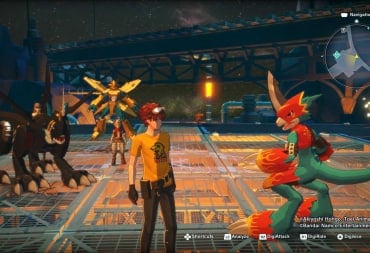
Outside of exploration, the core gameplay of Digimon Story: Time Stranger is in its turn-based battles. Battles are up to 3x3, with an extra three Digimon as a backup in your party. Much like SMT, speed is a factor, allowing you to have faster Digimon attack more often, and you'll pretty much always be upgrading or swapping around your party to find a combination that's most effective for any area you're travelling through.
Digimon has a combat triangle of the basic Data, Vaccine, and Virus types, but on top of that, there are a variety of types that are outside of that triangle, like No-Data or Unknown. Additionally, there are also elemental typings like Fire, Electricity, and… Steel.

Damage calculation takes into account the type of your Digimon, as well as the type of the attack, and sometimes even the trait of an enemy Digimon can see you swinging from dealing no damage at all, to dealing five times the amount of possible damage. It can be very satisfying to have everything line up correctly, but having so many variables also means you can take a Digimon who normally wouldn't be effective against an opponent and give them an ability or attack that will allow them to deal bonus damage. Here you'll end up doing 1.5x damage, or even weird variables like 2.3x damage.
I really appreciated these gameplay options, especially as I was getting to the end of the game and was honing in on my 'optimal' team. I could make sure that they were well-rounded as a team, but also within themselves. No matter who your favorite Digimon is, there's a way to have them be viable and take them on your adventure.
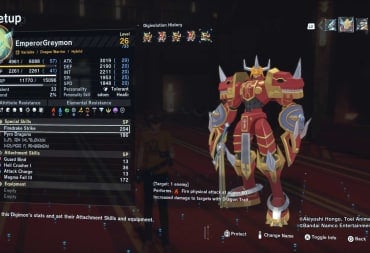
You can alter a Digimon's strengths and abilities even further by equipping them with a wide variety of different attacks and by equipping them with attachments that can boost their stats or allow them to resist certain damage types and status conditions.
Boss fights add even more complication as these massive Digimon don't just have more HP and deal more damage, but they'll also have different mechanical gimmicks or will pause at certain times to charge up and launch massive attacks. While I was able to defeat pretty much all of the bosses on my first try, I was normally pushing myself to the finish line with my 'all-rounder' team.

These experiences did a good job of pushing me to think on my feet, trying to figure out the best way to remain most defensive while also maximizing my damage multipliers. It also reinforced the idea that you could take your favorites with you and get through most battles. For those bosses that were too difficult with my all-rounder team, I was always able to spend 5-10 minutes looking through my roster, setting them up with some good attacks, and coming back with an incredibly powerful and specific team.
Raising Digimon Is A Full Time Job
Another meaty aspect of gameplay for Digimon Story: Time Stranger is in its monster evolution mechanics. Digimon have between six and seven different stages of growth from Baby to Mega+, and unlike other popular monster raising video games, Digimon have all kinds of crazy branched evolution. Your cat head might become a bipedal fox, who, after spending some time as a bird with a bush for a tail, becomes a sentient blob with an attachment to jewelry.

De-digivolving can lead you to just as many strange places as Digivolution, and as your Digimon continues to grow and change, its skill ceiling also rises, promoting the idea of you not just digivolving a Digimon into its most powerful form, but to let it run free across the digivolution tree.
To successfully Digivolve a Digimon, it needs to meet certain stat requirements; Greymon might become MetalGreymon with 592 HP and 520 ATK, but if you want a SkullGreymon, you need 1250 ATK and 1060 DEF.
I love the way that digivolution works in this game, there's certain Digimon that will have an easier 'natural' path of evolution but for the most powerful Digimon, or those that require special conditions like Armor or DNA/Jogress Digivolution you'll have to be paying more attention, creating a more powerful Digimon, and even interacting with them in certain ways.
A new mechanic to Digimon Story: Time Stranger is Personalities. Each Digimon can have one of sixteen possible personality types. These personalities affect which certain stats might grow faster, but they can also imbue a Digimon with a special ability. One of my favorites is Cheer, which increases ATK and INT at the start of a battle based on the bond of the battle members.

Personality was a mechanic that I mostly ignored during my playthrough. The benefits that it could imbue would definitely lend to certain Digimon digivolving in certain ways faster… but I also found that just leveling them up or powering them up with other Digimon was also a fast way to get the stats that I needed.
You'll be happy to know that, aside from needing certain personalities for Jogress evolution, it won't come into play much, but for those who are excited to dive into the Mega+ difficulty mode, having a Digimon with a specific personality will be a key factor to surviving.
It's great to see so many new and fan favorite Digimon are part of the roster of Digimon Story: Time Stranger, but it's also a bit weird to see some of the exclusions. The biggest space I can see is the main digimon from Frontiers, with Spirits for Fire and Light present and Ranamon available, but none of the other Spirits are part of the game.
That being said, there were some fascinating entries with returning fan favorites like the Royal Knights, and Seven Deadly Sins, alongside some newer Digimon like MagnaKidmon, Beelstarmon, and the Olympux XII.

As a side, you can really tell with the work being done on establishing a greater lore to connect and differentiate the Digimon games. While the past two Digimon Story titles pulled inspiration from the stories of the standard Digital World, this game takes place in the Iliad and references the original server as well as Shambala. Alongside the strong performance of this game, it also makes me very excited for the future of the series.
Quality Of Life Updates
As a longtime fan of JRPGs, I am always down for some turn-based combat and occasional grinding. There are a lot of specific things that Digimon Story: Time Stranger does to make sure the experience is always a good one, and that it doesn't feel like you're having your time wasted.
In combat, you can see the effectiveness of moves if you've used their types previously, or if you've had that Digimon before. This is helpful to make battles efficient, while also rewarding the work you've done filling out your Digimon field guide. Battles can also be sped up to 5x; this also cuts out certain animations, meaning that even when you're 50+ hours into the game, the combat never feels like a chore.
In the overworld, there are no random encounters, and you can pre-emptively strike your opponents. If you're strong enough, you won't even enter combat; you'll just be rewarded with experience, money, and items as if you fought that battle.

Some direct improvements from previous Digimon Story games are that you can access your bank of Digimon from anywhere, and you can also Digivolve from anywhere. This cuts out a lot of time that might have been spent running to and from the Digi-Farm. Additionally, there are a number of different ways to fast-travel around the world. No more getting too deep into a dungeon and having to slowly walk out, fighting random encounters along the way.
The Digi-Farm is one area that has fallen to the wayside with all of these enhancements. What was previously a place to let your Digimon gain experience when not travelling with you, and to train up specific stats, it still does those things… but when Digimon in your Bank earn EXP regardless, and it's so much nicer to just have them with you, I spent little to no time using the Digi-Farm.
This feature, much like the personality system, is one that I'm sure will be integral to the hardest difficulty modes, but for the standard game, you'll not likely need it.
Digimon Story: Time Stranger Review | Final Thoughts
It's been a long time since the release of the last Digimon Story game, and with a grand story, the establishment of a new Digital World, a complex and addictive combat system, and hundreds of Digimon to explore, Digimon Story: Time Stranger is an excellent new entry to the franchise.
The story grabbed me from the get-go wth an explosive launch and had me eager to learn more throughout the entire story, even if some sections dragged on a bit. Side-Missions were the weakest aspect, and while they were a snooze gameplay-wise, they certainly added more to the world and its inhabitants.
The core monster raising and digivolution was straightforward enough to learn and get good at, but there's also plenty for min/maxers to really dive into between the personality types, abilities, and training at the Digi-Farm.
This isn't just a good title for those familiar with Digimon and Digimon Story titles to purchase and play, but it's also a great entry point for fans of RPGs like Shin Megami Tensei who want to experience a version of that game with better monster evolution mechanics.
Digimon Story: Time Stranger was reviewed on PlayStation 5 with a copy provided by the Developer over the course of 57 hours of gameplay - all screenshots were taken during the process of review.
Review Summary
Pros
- Well developed narrative
- Combat showcases every Digimon
- Engaging Digivolution mechanics
- Excellent QoL improvements
Cons
- Side-Quest Gameplay Is Lacking

Andrew has written Video Game and Entertainment news, reviews, and guides for 10+ years. As Senior Content Manager, he assists in creating and editing… More about Andrew